California has more dentistry schools than any other state in the United States. If you intend to attend any of the seven California dentistry schools, whether you already live in California or just want to build your future as a dentist there, you have lots of possibilities.
But how can you narrow that list? How do you choose the best dental schools in California (and as such, which to prioritize during the application process)?
In this article, we will provide a comprehensive overview of the best dental schools in California, as well as explain how they gained that reputation. We’ll demonstrate how to carefully examine their profiles to identify the best dental schools in California as well as the ones that are suitable for you.
Table of Contents
Understanding the Requirements for the Best Dental Schools in California
Aspiring dentists should take into account a number of things when selecting the best dental schools in California. These elements have a big impact on how well the institution provides instruction and training. There are several excellent dentistry schools in California that excel in a variety of fields, guaranteeing that students get the greatest education and job preparation possible.
A. Licenses and Accreditation:
When assessing the best dental schools in California, accreditation is a crucial factor to consider. It guarantees that a dental school is accepted by respectable accrediting organizations and satisfies certain requirements for educational excellence. The Commission on Dental Accreditation (CODA) and other reputable bodies accredit the best dental schools in California.
Students will receive a top-notch education that satisfies industry standards thanks to this accreditation. These institutions’ legitimacy and dedication to quality are further demonstrated by the fact that they possess the permits required to conduct business lawfully.
B. Faculty Reputation and Expertise:
Students’ educational experiences are greatly influenced by the faculty at the best dental schools in California. Renowned professors who are authorities in their disciplines teach at the best dental schools in California. These instructors give students outstanding learning experiences by bringing a lot of expertise and knowledge to the classroom. In addition to improving the standard of instruction, their reputation and experience encourage and inspire students to achieve academic success.
C. Equipment and Facilities:
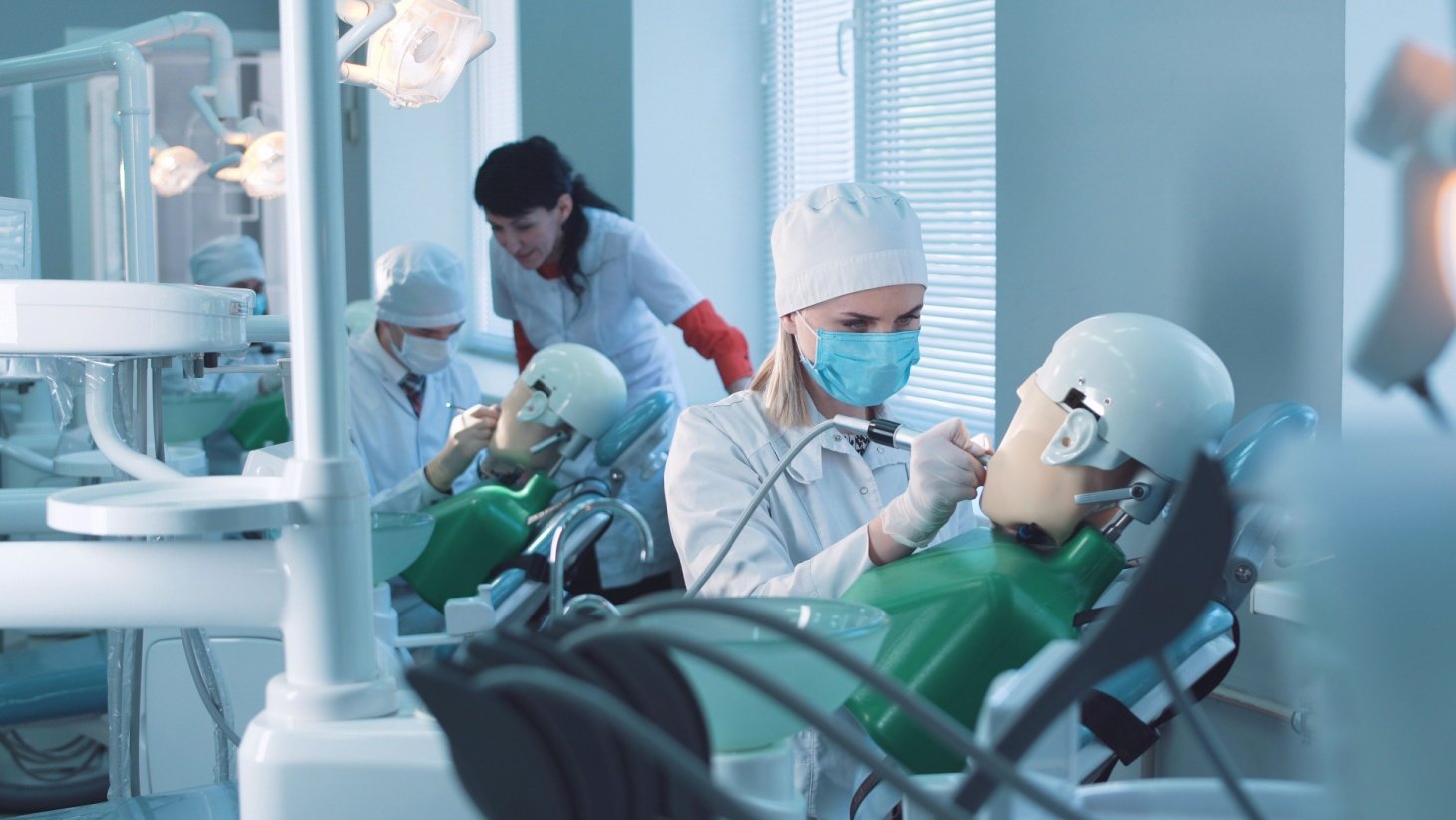
Modern facilities and tools are necessary for the best dental schools in California to give students a thorough and practical education. The best dental schools in California recognize the value of making investments in cutting-edge dental technology.
They make sure that their facilities are furnished with the newest instruments and equipment so that students can have real-world experience and acquire the skills needed in contemporary dental practice. With state-of-the-art dental labs and simulation facilities, these schools give students an environment that is similar to actual dentistry settings.
D. Employment Opportunities and Student Success Rates:
The success rates of their alumni on national licensing examinations and their employment prospects after graduation are important factors to take into account when assessing the best dental schools in California. Successful dental professionals have been produced by the best dental schools in California in the past.
The success of their training and education programs is demonstrated by the high number of graduates who pass national licensing tests. Additionally, these institutions have solid affiliations to esteemed dentistry clinics, giving their graduates plenty of job options in the industry.
For those who want to become dentists, picking the best dental school in California is an important choice. Students can make sure they receive the best education and training available by taking into account elements including facilities, faculty expertise, accreditation, and student success rates. These are areas in which the best dental schools in California excel, providing students with a thorough and fulfilling education that equips them for a lucrative dental career.
An Overview of California Dental Education
California is known for its extensive curriculum and demanding training programs in dental education. It is intended to give students the practical skills and strong foundation in dental sciences needed for success in the workplace. Numerous employment options in clinical practice, research, academia, and public health are available to those who complete their dental school in California.
Numerous notable dental schools, including the University of California, San Francisco School of Dentistry and the University of Southern California Herman Ostrow School of Dentistry, are located in California. These universities draw students from every corner of the world with their cutting-edge research possibilities and state-of-the-art facilities.
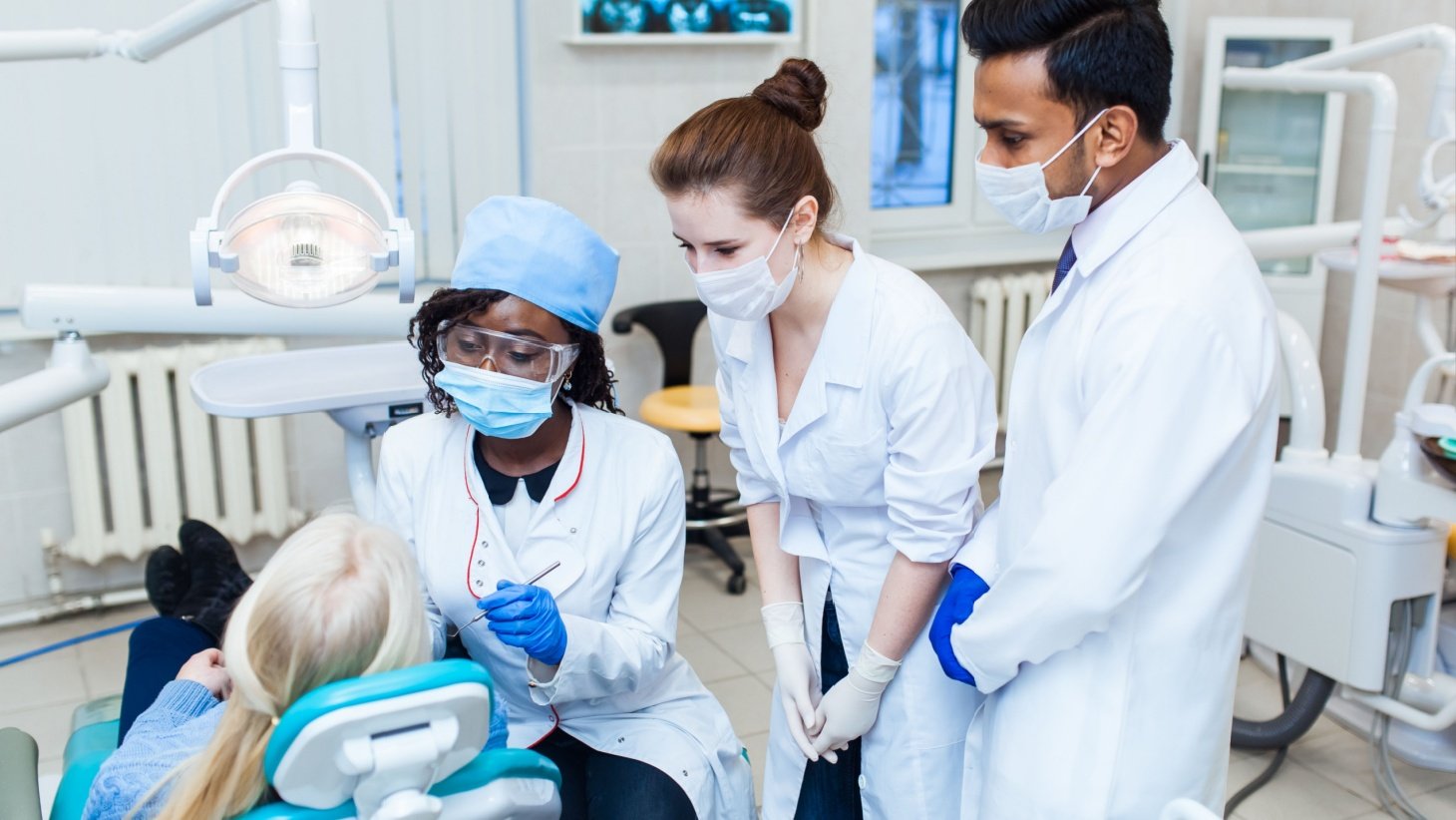
The emphasis on practical training is one of the main advantages of dentistry education in California. Under the supervision of knowledgeable faculty members, students can work in dental clinics and obtain real-world experience. This hands-on instruction equips students to manage actual dental problems and acquire the clinical skills required to give patients high-quality care.
Related: Best Vocational Schools In Canada
Importance of Dental Education
Aspiring dentists must attend the best dental schools in California. Students who receive dental education are better prepared to identify and manage oral health problems. Additionally, it places a strong emphasis on patient-centered treatment and ethical behavior, preparing aspiring dentists to serve their communities with professionalism and compassion.
California dentistry education emphasizes teaching students about the most recent developments in dental technology in addition to clinical skills. For the purpose of giving more precise diagnoses and treatment regimens, students must learn how to use cutting-edge tools and technology like digital radiography and CAD/CAM systems.
By incorporating technology into dental education, graduates are guaranteed to be adequately equipped to adjust to the quickly changing dental sector.
The Steps to Becoming a Dentist in California
In California, there is a path that students must take in order to become dentists. Aspiring dentists must enroll in a dental school recognized by the Commission on Dental Accreditation (CODA) and pass the Dental Admission Test (DAT) after earning a bachelor’s degree. There are just a few spots available each year, making the application process for the best dental schools in California extremely competitive.
After being admitted to a dental school, students must complete a demanding four-year curriculum that includes clinical rotations, lab work, and classroom lectures. They study a variety of topics, including periodontics, orthodontics, oral pathology, and dental anatomy. The program is intended to give students a thorough grasp of oral health and to prepare them for the difficulties they may encounter in their future employment.
Students must complete the National Board Dental Examination (NBDE) to prove their proficiency in dental knowledge and clinical abilities after graduating from the best dental schools in California. Graduates can seek licensure through the California State Board of Dental Examiners after passing the NBDE. Before being able to obtain a license, one must submit an application, pass a written test, and fulfill additional conditions established by the board.
Dentists in California might opt to specialize in orthodontics, periodontics, or oral surgery after obtaining their license. Additional education and training are necessary for specialization, typically through a postgraduate residency program. Through these programs, dentists can acquire additional knowledge and abilities in their chosen field, enabling them to offer patients specialized care.
To sum up, the best dental schools in California provide prospective dentists with a thorough and demanding training program. Students get the information and skills necessary to succeed in their vocations, from the fundamental sciences to sophisticated clinical abilities. California dentistry education educates graduates to meet the changing demands of the dental profession by emphasizing patient-centered care and technological integration.
Best Dental Schools in California
The best dental schools in California provide a comprehensive education along with a variety of benefits. While some schools lead the way in cutting-edge dental research, others have made a concentrated effort to concentrate on rural dentistry and public health.
All schools can prepare you for success as a dentist in almost every field, even though your path and interests may change as you advance in your academic career. Examining dental school admission statistics can also be helpful.
It’s also noteworthy that California dental schools are somewhat more competitive because their acceptance rate is often lower than normal. You can enhance your application and outperform the competition by keeping in mind your strengths and areas of natural aptitude as you go through the list of institutions.
1. University of California, Los Angeles School of Dental Medicine:

- Overall Acceptance Rate: 6.36%
- Average GPA: 3.72
- Average DAT Score: 22 (new DAT score: 460)
- Total Cost of Attendance: $109,952
- Total Cost of Attendance (out-of-state): $122,197
For a number of reasons, the UCLA School of Dental Medicine is regarded as one of the best dental schools in California, United States. It offers a number of degree programs, but if you’re just interested in becoming a dentist, UCLA’s four-year DDS program frequently ranks highly in dental school rankings due to its creative use of technology, diversity of specialty clinics, and welcoming, varied environment.
Given the school’s location, this can be the right place for you if you want to gain a lot of firsthand patient experience with a broad demographic. The school reported nearly 5,000 patient visits last year as part of its strong commitment to treating the community in which it operates. Furthermore, the institution hosts outreach programs on a monthly basis to provide basic dental care to marginalized communities.
Academically, the school’s curricula reflect its dedication to service and population care in both core and elective courses. During your clinical years, you will have the opportunity to rotate across a variety of settings, including Urgent Care, Community-Based Clinical Education, Professional Responsibility, and Clinical Patient Management. If you are particularly interested in the technical parts of dentistry, you can take a variety of science-based electives such as Advanced Materials and Biomechanics, Clinical Pediatric Dentistry, or Clinical Endodontics.
As a public school, the school prioritizes residents, but it also accommodates a variety of student groupings. If you are from a state that is a member of the Western Interstate Commission on Higher Education (WICHE), you will be eligible to apply and pay the same tuition as a California resident if accepted. Undergraduate international students may also apply, provided they meet the conditions for a student visa. However, the school also provides a Professional Program for International Dentists, which assists foreign-trained dentists in obtaining their DDS in the United States so that they can take national or state licensure board tests.
The school requires traditional dental students to have a competitive GPA and DAT scores, as well as up to three dental school letters of recommendation. You do not require a full bachelor’s degree, but you must have completed at least 90 credits of an undergraduate degree and meet seven dental school prerequisites. You can submit an application with a Canadian undergraduate degree, but the institution will not recognize the Canadian DAT, so if you’re from Canada, you’ll need to take the American version.
2. University of California, San Francisco School of Dental Medicine:
- Overall Acceptance Rate: 3.9%
- Average GPA: 3.76
- Average DAT Score: 22.6 (new DAT score: 460)
- Total Cost of Attendance: $109,952
- Total Cost of Attendance (out-of-state): $122,197
UCSF School of Dental Medicine, as the oldest and best dental school in California, continues to serve the public through numerous outreach activities, an accessible curriculum, and a lowering of the minimum GPA and DAT score required to enter. Along with its four-year DDS program, the school has developed a number of additional degree programs, including two dual-degree possibilities. However, you can also apply to the school’s post-baccalaureate program, which aims to improve your GPA or provide you with a much-needed review of the science and medicine of dentistry.
The post-bacc premedical program also aims to increase diversity in the institution and dentistry in general. One of the prerequisites is that you be a member of a historically underrepresented group. It is an excellent alternative if you are from a marginalized population or minority.
As one of the best dental schools in California, it provides two separate tracks for foreign-trained dentists: a two-year program for advanced graduates who have previously trained in the United States, and a three-year program for those who have no prior experience in the United States. Traditional students can apply without a bachelor’s degree, but UCSF is not a dental school without required prerequisites, and there are strict credit and grade requirements. You must fulfill all eight criteria with a C- or higher.
With its large population, practically every dental school in California prioritizes direct patient experience through rotations or employment in the school’s free dental clinic, and the UCSF School of Dentistry is no exception. The school runs and operates 22 dental clinics across the state, giving you plenty of possibilities for rotations.
Aside from its commitment to patient care, UCSF aspires to create significant scientific and medical improvements in dental treatment across all specialties, including oral surgery, oral cancer, and pediatric dentistry. It features four unique research centers on campus that are widely regarded and have made significant advances in sectors such as dental health disparities, biomaterials and bioengineering, and craniofacial biology.
Related: 25 Best Pharmaceutical Companies In Nigeria
3. Herman Ostrow School of Dentistry at the University of Southern California:
- Overall Acceptance Rate: 6.1%
- Average GPA: 3.78
- Average DAT Score: 20.7 (new DAT score: 420)
- Total Cost of Attendance: $162,092
The Herman Ostrow School of Dentistry at USC is one of the three best dental schools in California that are part of the UC system. It shares many characteristics with its sister schools at UCLA and UCSF, but it also has some distinct elements. The school invites students from all backgrounds and even provides student visas for overseas undergraduate students who want to enroll in the four-year domestic DDS program. It also offers opportunities for foreign-trained doctors to obtain accreditation, but what distinguishes the Ostrow School of Dentistry is its focus on providing online dental school programs.
To clarify, it currently doesn’t provide an online DDS program. However, it does offer multiple online Master’s degrees for individuals who want to get a graduate degree before going to dental school or who just want to further their careers in non-dentist dentistry vocations like dental hygienists or dental assistants.
The regular, four-year DDS program requires a list of seven requirements, which, like the prerequisites for other dental schools in California, reflect a more comprehensive curriculum. You must finish at least one year of philosophy, humanities, or arts coursework, as well as one year of English composition. The school will accept pass/fail scores for courses done during the pandemic, but the other qualifications are all science-based and require lab work without any online components.
Ostrow is one of the best dental schools in California that does not accept applicants who only fulfill the qualifications; instead, they require a complete bachelor’s degree. Transcripts, DAT scores, and at least three recommendation letters—one of which must be from a dentist—must also be provided. You should understand how to shadow a dentist to fulfill the criteria and make the most of the experience, since the school suggests but does not mandate at least 100 hours of shadowing.
4. Loma Linda University School of Dentistry:

- Overall Acceptance Rate: 6.9%
- Average GPA: 3.47
- Average DAT Score: 21.01 (new DAT score: 440)
- Total Cost of Attendance: $93,701
Since Loma Linda is one of the best dental schools in California and also the state’s most recent institution, the Loma Linda University School of Dentistry is among California’s more recent dental schools. Given its Seventh-Day Adventist heritage, Loma Linda emphasizes its dedication to Christian values even though all of its programs, degrees, and courses are secular. If this doesn’t appeal to you, you might want to consider any of the other fully secular dental schools in California.
Having said that, the school’s minimal GPA and DAT requirements are far lower than those of other dental schools, making it one of the simplest to get into. You can apply with a 2.7 GPA or a 19 DAT score to be taken into consideration, but if you want to be taken seriously, you should aim for a GPA of at least 3.5 and a DAT score of at least 20.
Additionally, the school offers a bridge program for undergraduates from its own undergraduate institution or others in California, allowing you to petition for early admittance in your senior or last year of undergrad and immediately transfer to the four-year DDS program. Applying to the school’s Bachelor of Dental Hygiene degree, which serves as a gateway to the four-year DDS program, is another option.
Compared to the other best dental schools in California, the school has fewer prerequisites. The majority of the prerequisites are science-based (chemistry, physics, and biology), and one year of English composition is also required. If you have 93 completed credits and have earned aC or above on all prerequisites, you can also enroll without a bachelor’s degree. Additionally, Loma Linda makes an effort to engage the community and encourage minorities and other underrepresented groups to pursue careers in dentistry. The school offers a number of summer programs to encourage young people, minorities, and others to choose a career in dentistry.
5. Western University, College of Dental Medicine:
- Overall Acceptance Rate: 2.3%
- In-State Acceptance Rate: 1.4%
- Average GPA: 3.35
- Average DAT Score: 20 (new DAT score: 420)
- Total Cost of Attendance: $136,089
Anotherbest dental school in California that is making an effort to support the local communities and marginalized groups is Western University College of Dental Medicine. You will be welcomed at WUCDM if you have an interest in practicing in these underprivileged regions, since more than 40% of DMD program alumni go on to do so. Despite not requiring a full bachelor’s degree to enter and only requiring fulfillment of five requirements with a C grade or above, the school has an extremely competitive curriculum.
At least 40 hours of shadowing or professional experience in an oral healthcare setting, such as a dental hygienist, assistant, or technician, are required, but the school suggests at least 100 hours to be a competitive applicant. Only a four-year DDS, a two-year program for dentists with foreign training, and a single Advanced Education in General Dentistry residency in partnership with the NYU Langone Health hospital are now offered by the school, which has a limited range of degree programs.
However, it also provides practicing dentists with a number of online certificate programs to enhance or acquire new abilities and obtain a certificate in certain techniques.
6. California Northstate College of Dental Medicine:
- Overall Acceptance Rate: 2.3%
- Average GPA: 3.4
- Average DAT Score: 20 (new DAT score: 420)
- Total Cost of Attendance: $142,646
The newest dental school in California, California Northstate College of Dental Medicine (CNUCDM), just graduated its inaugural class. To adequately address the four main facets of its declared mission, the school is still working on its curriculum:
- Human Systems
- Odontology
- Oral and Maxillofacial Studies
- Social and Behavioral Sciences
Since it is a Canadian-friendly US dentistry school, you can submit an application with your Canadian degree, even though the Canadian DAT is not accepted. The school is not biased against California students, so you can apply from out of state or from Canada. A bachelor’s degree and the completion of six science courses—physics, organic chemistry, inorganic chemistry, biochemistry, biology, and human anatomy—are required for applying. Additionally, you have to have fulfilled an English writing requirement.
Two distinct DMD programs are hosted by CNUCDM:
- A standard DMD program that lasts four years.
- In partnership with California Northstate College of Health Science, a 3+4 BS/DMD program
Only CNC College of Health Sciences students enrolled in the three-year pre-dental program are eligible for the combined BS/DMD program, which helps you get ready for dental school. Another option is to enroll for a bachelor’s degree in dental hygiene before applying to the DMD program.
7. Arthur A. Dugoni School of Dentistry at University of the Pacific:

- Overall Acceptance Rate: 6.9%
- Average GPA: 3.5
- Average DAT Score: 22 (new DAT score: 460)
- Total Cost of Attendance: $146,654
The highly regarded, expedited, three-year DDS program at the Dugoni School of Dentistry in San Francisco is the first of its kind in the country as also one of the best dental schools in California. The school’s history is comparable to that of many other best dental schools in California, but it has made a number of significant advancements in dental education, such as emphasizing a human-centered curriculum that allows students to interact more with patients while also learning in smaller classes and with faculty.
However, if you’re worried about how long it takes to become a dentist, the school also provides alternatives to its three-year degree and allows undergraduate students to apply at different points throughout their bachelor’s studies in order to start the DDS program earlier.
You can decide to:
- After completing just two years of your bachelor’s degree, enroll in the three-year program (2+3).
- After completing three years of undergraduate study, enroll in the three-year program (3+3).
It is difficult to enter either of these routes. The fastest program (2+3) requires a minimum GPA of 3.70, whereas the other two programs—including the longest 4+3 program, where you finish your bachelor’s degree before enrolling in the three-year accelerated program—require a minimum GPA of 3.05.
A bachelor’s degree is not necessary to apply to the DDS program, but among many other criteria, you must have fulfilled at least five prerequisites and completed at least 40 hours of shadowing. In addition to those admission programs, Dugoni permits dental graduates with overseas training to apply to the two-year accreditation program, which offers the same course selections and faculty experience as the three-year domestic program.
If you fulfill all the requirements for admission to the DDS program, you can also enroll in the school’s bachelor of dental hygiene program. If you’re a practicing dental professional or dentist, you have the option to take advantage of the school’s six various residency programs that range from the standard (Advanced General Education in Dentistry) to the more creative Dental Sleep Medicine Fellowship.
FAQ’s
Which of the best best dental schools in California Is the Easiest to Enroll in?
Some dental schools are easier to get into than others, despite the fact that all the best dental schools in California are often more competitive than other dental schools. Students at California Northstate University Dental School, for example, have an average GPA of 3.4 and a DAT score of 19. It’s also crucial to remember that average scores fluctuate annually.
How long does the best dental schools in California last?
The best dental schools in California and around the United States are four years in length. However, an accelerated three-year degree is available at the Arthur A. Dugoni School of Dentistry at the University of the Pacific. The curriculum and year-round approach guarantee that students graduate with the same level of preparation as their four-year counterparts.
Conclusion
For many people, becoming a dentist might mean many different things. Delivering medical advice to those in need, a successful dentist is both a businessman and a scientist. When patients receive pleasant and informative visits regarding their oral health, they are always grateful.
It takes time to acquire the knowledge and abilities needed to provide high-quality treatment. When applying to the best dental schools in California, you don’t have to have everything sorted out, but recognizing your strengths and areas of interest can make the process of choosing a school and conducting interviews much simpler.
Fortunately, there are several of the best dental schools in California to select from. Some of the best dental schools in California can help you grow your career as a dental professional, whether or not you intend to work as a general dentist, specialize in a specific field, pursue unique research possibilities, or make an impact in public health.